Closing a growing business: the staff
Part 3 of the wind down series. Six people who had done nothing wrong. Tell them early and yourself, be honest about why, get the money right, help them land, and let them keep the standard to the last day.
Part 1 was the decision. Part 2 was the customers. This part is the hardest one to write, because it's about the people I worked with every day.
United Meat Co had a team of six across Brisbane and Melbourne. Every one of them had helped build the business from nothing. They'd made the cold calls, packed the orders, chased the deliveries and taken the complaints. And now I had to tell them the business was finishing, through no fault of theirs.
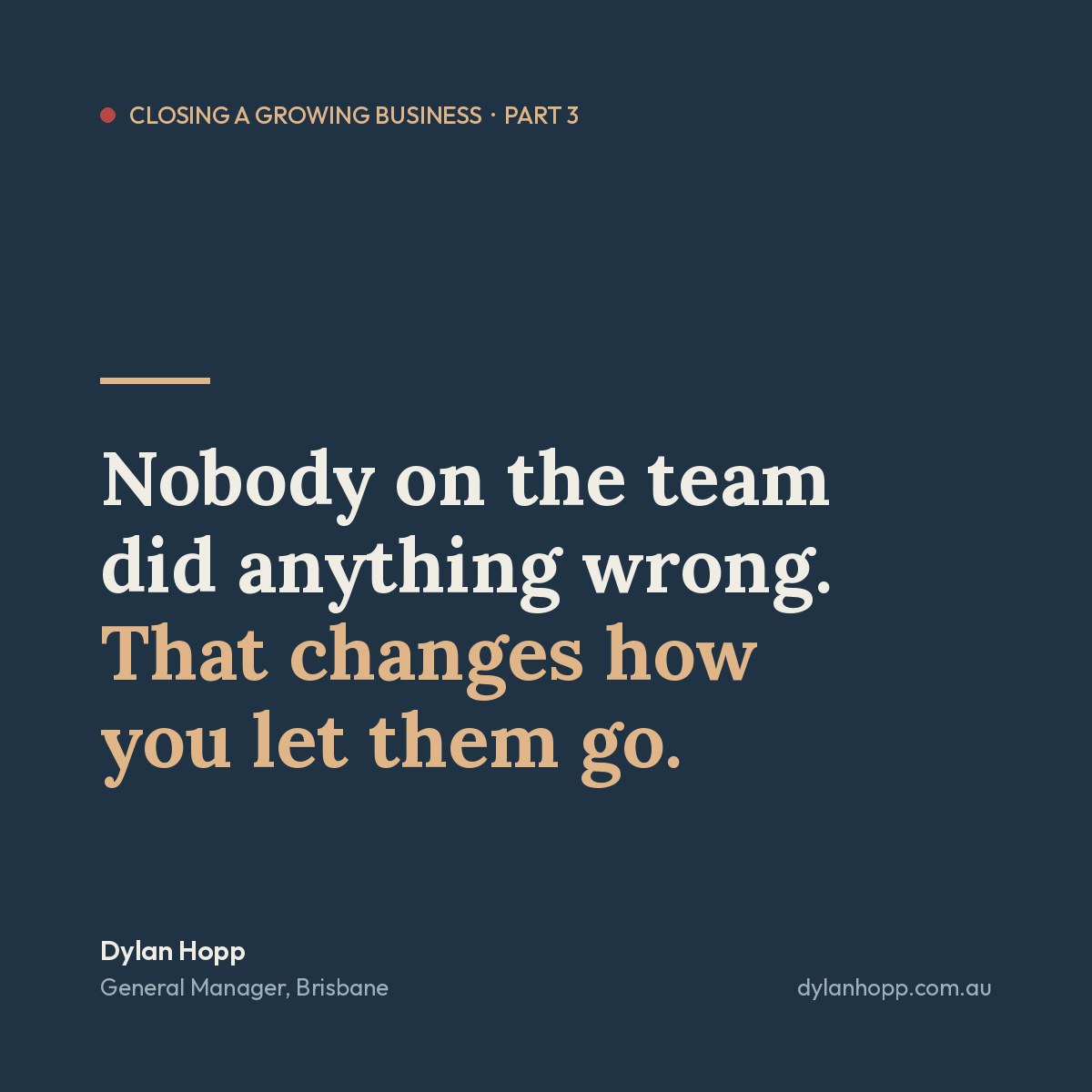
I'd had to move someone on for performance before. That's hard, but it follows a process, and if you've done your job the person has seen it coming. This was different. Nobody had done anything wrong. The business was growing. The decision was about chain capacity and export margins, and they'd had no part in it. That changes how you let people go, and it should.
Tell them early, and tell them yourself. Face to face where I could, and before they heard it anywhere else. In a small industry, word travels, and the worst way for someone to find out their job is going is from a customer or a competitor. The sooner people know, the sooner they can plan. Holding the news back to keep everyone working to the last day would have been easier for the business and wrong for them.
Be honest about why. I gave the team the same reasons the leadership team had given me. Export margins, plant capacity, the numbers. No softening, no corporate language, and no pretending it was anything other than a commercial decision. People can handle a hard truth. What they can't handle is being managed with a story, and they can always tell.
Get the money right. I ran the payroll myself, so I made sure final pay, leave and entitlements were correct and paid on time, and that the right process was followed for every person. People have enough to deal with when a job ends without having to chase what they're owed. It's the most basic thing a business can do for someone on the way out, and plenty get it wrong.
Help them land. References written, calls made to people I knew in the industry, and time off for interviews without anyone having to ask twice. One of the team went straight into a state manager role with another business. That's the result I'm proudest of from the whole wind down, more than any customer or dollar.
Keep the standard to the last day. This one is on the team, not me. They knew the end date, and they kept turning up and kept delivering for customers right to it. Nobody coasted. That's the best thing I can say about them, and I'd hire any of them again.
How you treat people when there's nothing left in it for the business is the truest test of a manager. Anyone can look after staff while they're making money for you. Next in the series, suppliers and cash.

General Manager, Brisbane. Builds with AI. More about me