Who is the clock?
Every business runs on a rhythm, and in an owner run business it forms around one person. A general manager's job is to move it onto a system, and the owner's job is to stop being the clock.
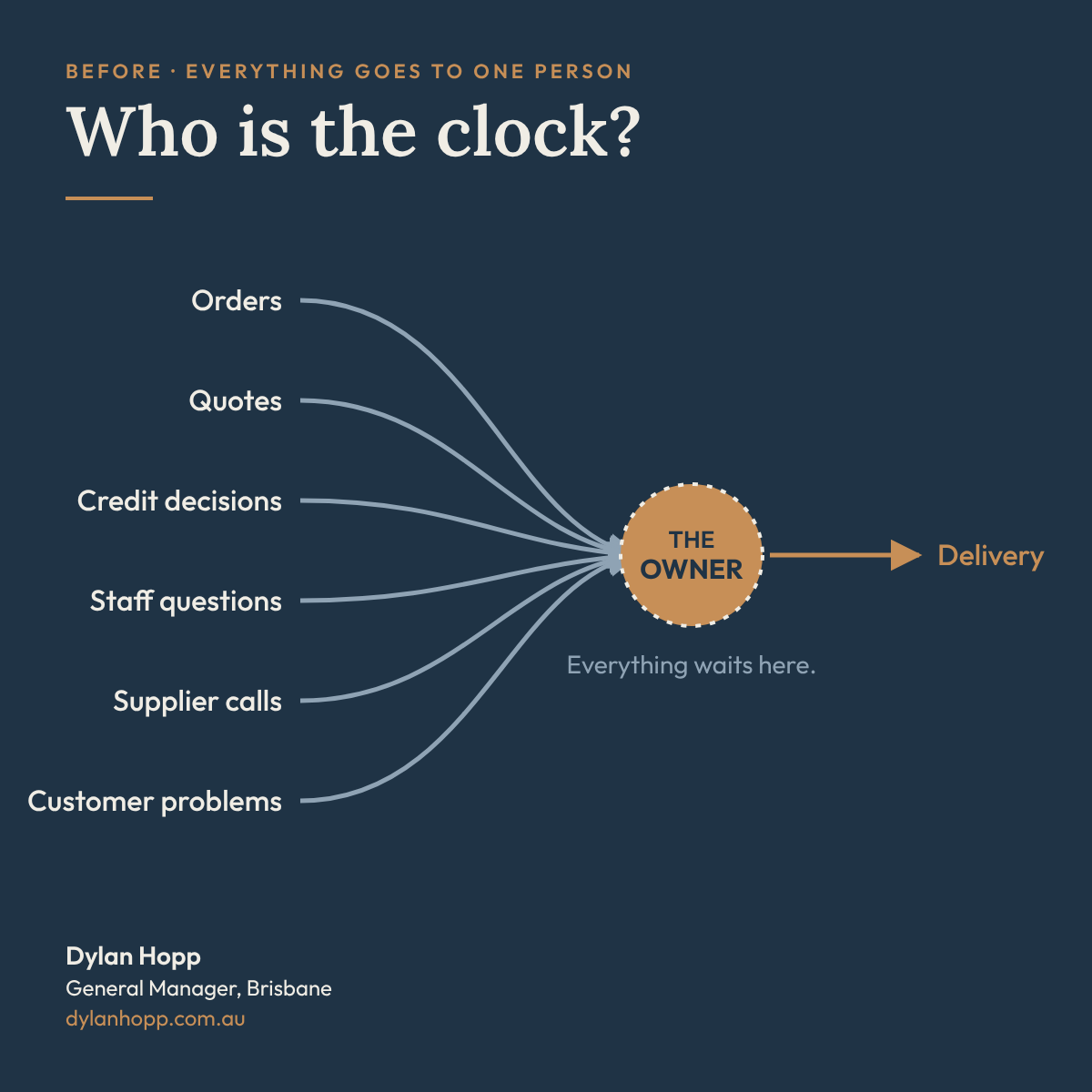
Every business runs on a rhythm. Nobody sits down and designs it. It settles in over years, out of a thousand small habits. When the first truck leaves. Who gets asked when a price is wrong. After a while the rhythm is just how the place works.
In an owner run business that rhythm forms around the owner. They were there first, they know the most, and for a long time they were the only one who could say yes. So staff learn early that every question, every decision and every problem goes to one person. Nobody decides this. It just happens, and once it has happened it is hard to see from the inside.
That person becomes the clock. The business keeps time when they are in the building and drifts when they are not. Orders wait. Quotes sit. A customer with a small problem gets a long delay because the one person who could fix it was on the road.
That is why good owners end up run off their feet. It is rarely the workload. It is that everything waits on them. Twenty small decisions a day, each one stopping someone else until it is made, add up to a person who never gets to the work only they can do.
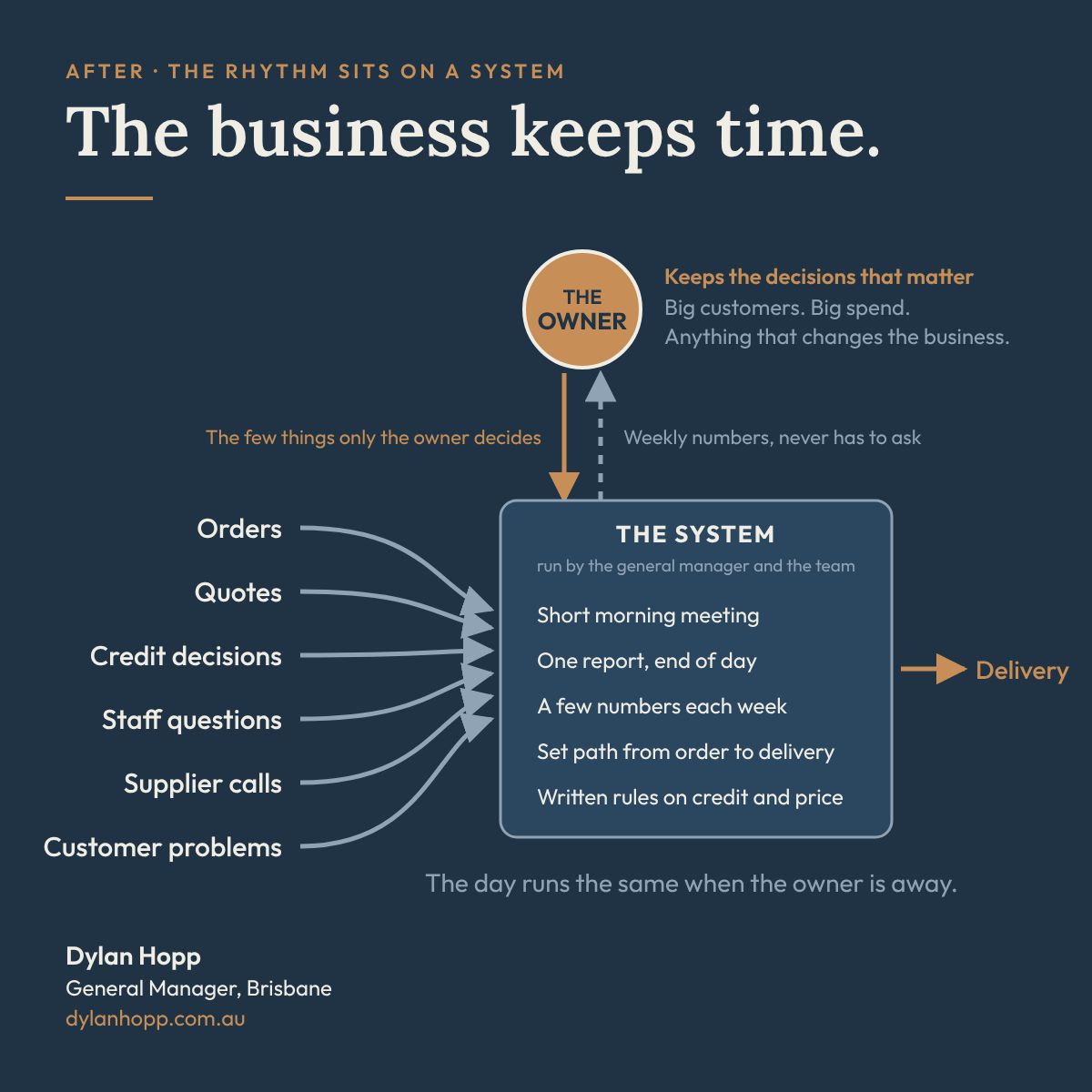
A general manager's job is to move the rhythm off a person and onto a system. Not a big system. A short meeting every morning where the day gets sorted. One report at the end of the day. A few numbers everyone sees each week. A set way a job moves from order to delivery, so the next step is obvious without a conversation. None of it is clever. It just has to happen the same way every time.
Respect the rhythm before you change it. If a business has lasted decades, most of what it does works, even the parts that look odd. Learn the beat first. Then fix the two or three things that hurt most and leave the rest alone. A manager who rebuilds everything in the first month usually breaks more than they fix.
The hard part is not the system. The owner has to stop being the clock. Staff will walk past the new process and go straight to them, because that is what has worked for years. The owner has to send them back. Not once, every time, until the new rhythm sets. That takes more discipline from the owner than from anyone else.
When it works, the owner gets their time back for the work only they can do, and the staff know what happens next without asking. The day runs the same whether the owner is in the building or not.
A good general manager does not replace the owner. He makes the business keep time without them.

General Manager, Brisbane. Builds with AI. More about me