What I actually used to build the first version of LIFEConnected AI
The first version was built in Replit, with me writing briefs the way I used to for staff and testing what came back on my phone. The tool was new. The job of briefing clearly and checking the result was the same one I had running a business.
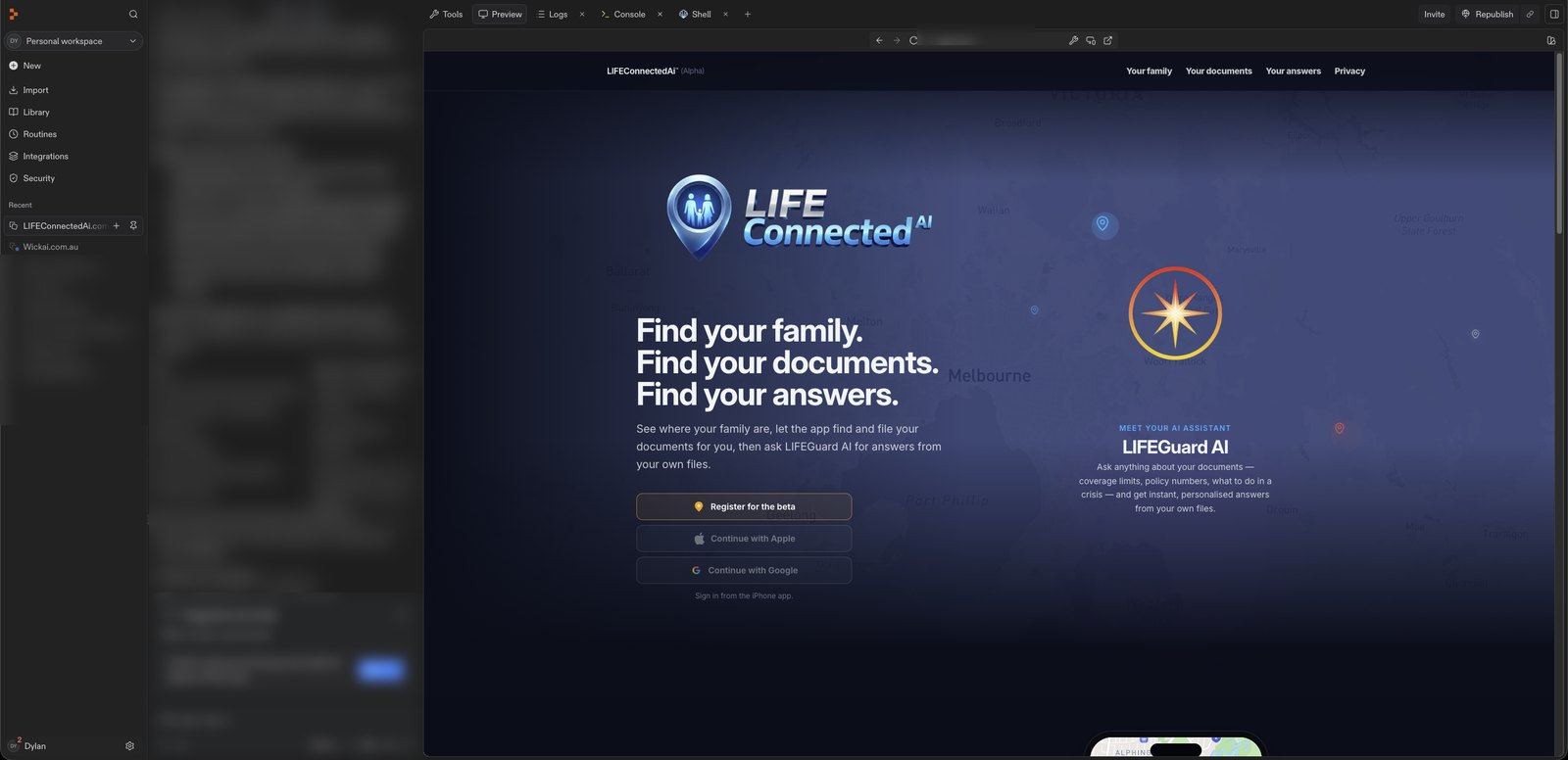
A few people have asked what I actually used to build LIFEConnected AI, so here's the honest answer.
The first version of the app was built in Replit. I'm not a developer, so I wrote briefs the way I used to write them for staff: who it's for, what good looks like, what could go wrong, when it's really due. Replit's agent built from those, I tested what came back on my phone, and we went round again. My family were the testers.
What surprised me is how much of the job was the same as running a business. Clear brief, quick feedback, fix the small thing before it becomes a big thing. The tool changed. The work didn't.
It's not the only thing in the kit and it won't be the last, but it's the one that got a business person to a working app in his hands.
What did you build your first version in, and would you pick it again?
What a brief to the tool looks like
The same four lines I'd give a person, every time:
- Who it's for. A parent on the school run, one hand, bad signal. Not "the user".
- What good looks like. A screenshot or a sentence of the finished thing, not a feature list.
- What could go wrong. The three ways I've seen it break before. This is the line I used to skip.
- When it's really due. So the tool, like a person, knows what to cut.
Then I test it on my phone, not in a demo, and send back what's wrong in plain language. Most of the skill is in the brief and the checking, not the tool.

General Manager, Brisbane. Builds with AI. More about me