Why AI tools feel familiar if you ever managed a virtual assistant
Because the rule hasn't changed. A virtual assistant and an AI tool both give you back exactly what your brief deserved. The difference now is the loop takes minutes instead of overnight, so you find out your brief was thin while you still remember writing it.
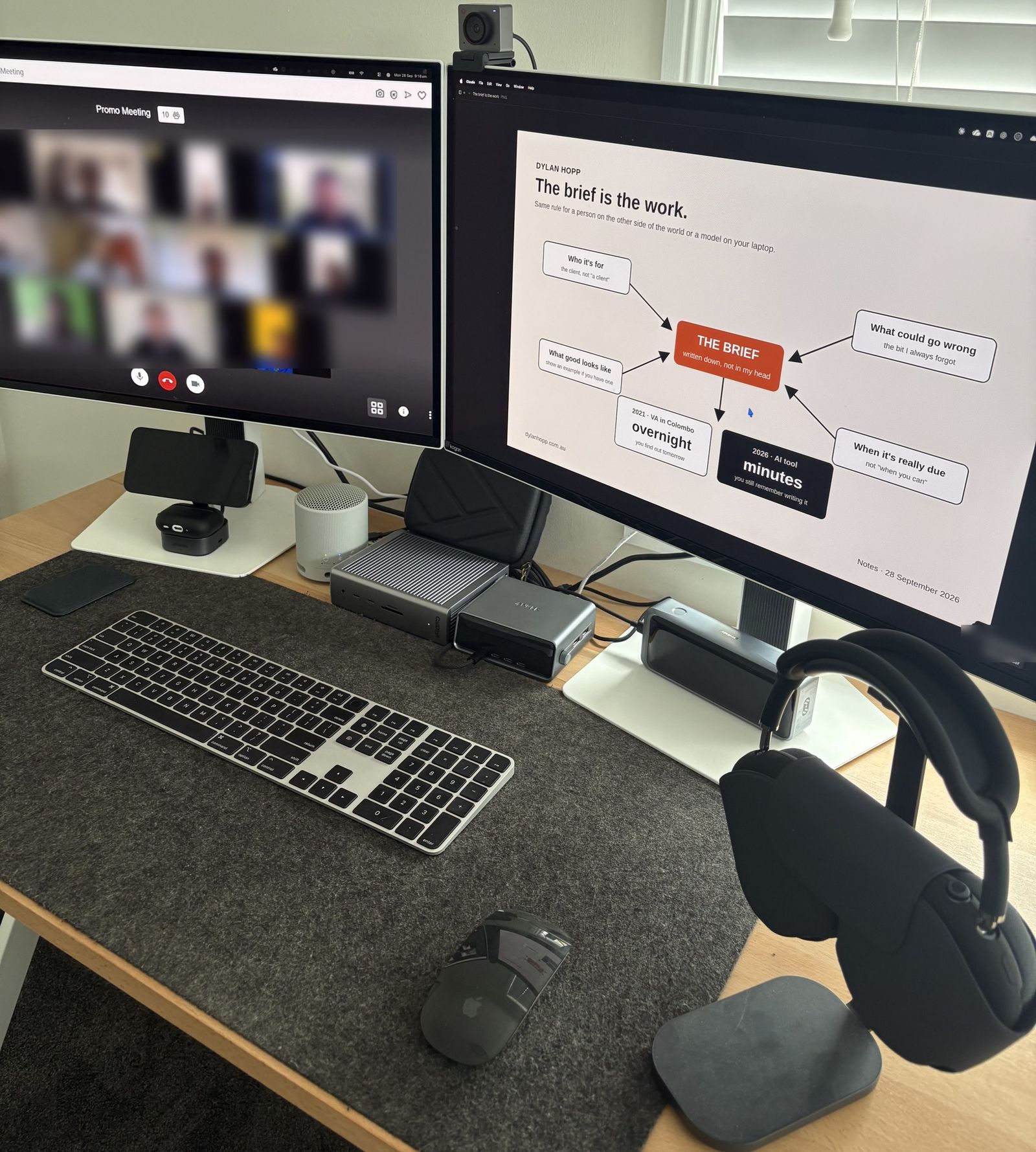
I've been thinking about the gap between having help and actually getting help.
When I ran my own business inside RE/MAX a few years back I had a virtual assistant in Sri Lanka. He was good. But the honest lesson was that getting the best out of him was my job, not his. Every task needed the context in my head written down: which client, what the deadline really was, what good looked like. The days I skipped that step, the work came back technically done and practically useless.
I'm seeing the same thing now with AI tools. Same rule. The system is only as good as the brief you hand it, whether that's a person on the other side of the world or a model on your laptop.
Two things have changed though. The tools are starting to close the gap themselves, asking the questions I used to forget to answer. And the loop that used to take overnight now takes minutes, so I find out my brief was rubbish while I still remember writing it. Same model as the old VA days, just with the delay taken out. That's the bonus.
Anyone else who managed a VA back then finding AI tools feel familiar?
What a brief actually needs
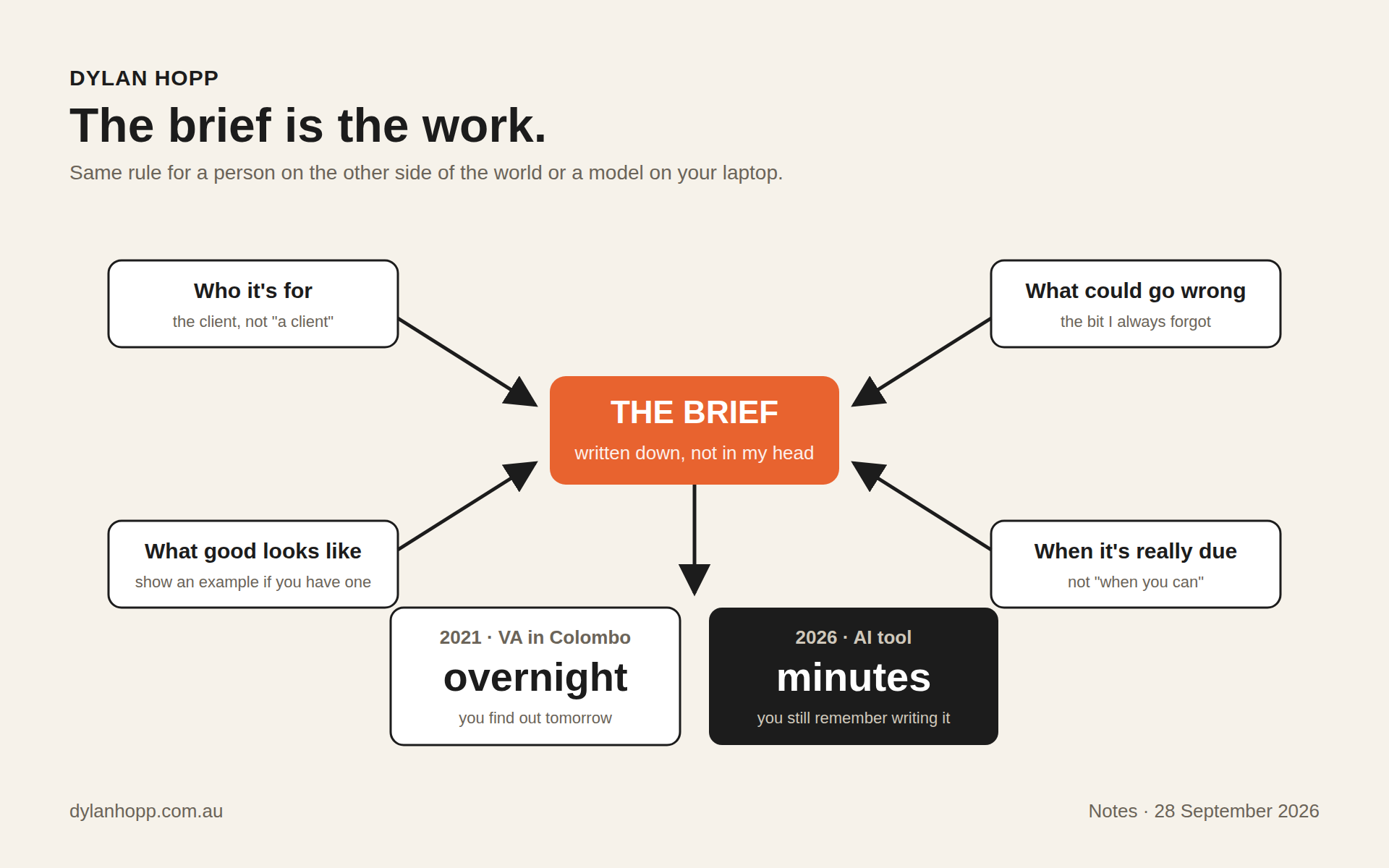
- Who it's for. The client, not "a client".
- What good looks like. Show an example if you have one.
- What could go wrong. The bit I always forgot.
- When it's really due. Not "when you can".
Write those four down before you hand the job over and most of the back and forth disappears. That was true with a person in Colombo and it's true with a model on my laptop.

General Manager, Brisbane. Builds with AI. More about me