How I built my website so AI could find me
I added a structured Person record to dylanhopp.com.au so Google and AI tools know exactly who I am, then linked it to my other profiles and tagged every post the same way. It took a day, no hand written code, and it means the answer to "who is Dylan Hopp" is consistent and mine.
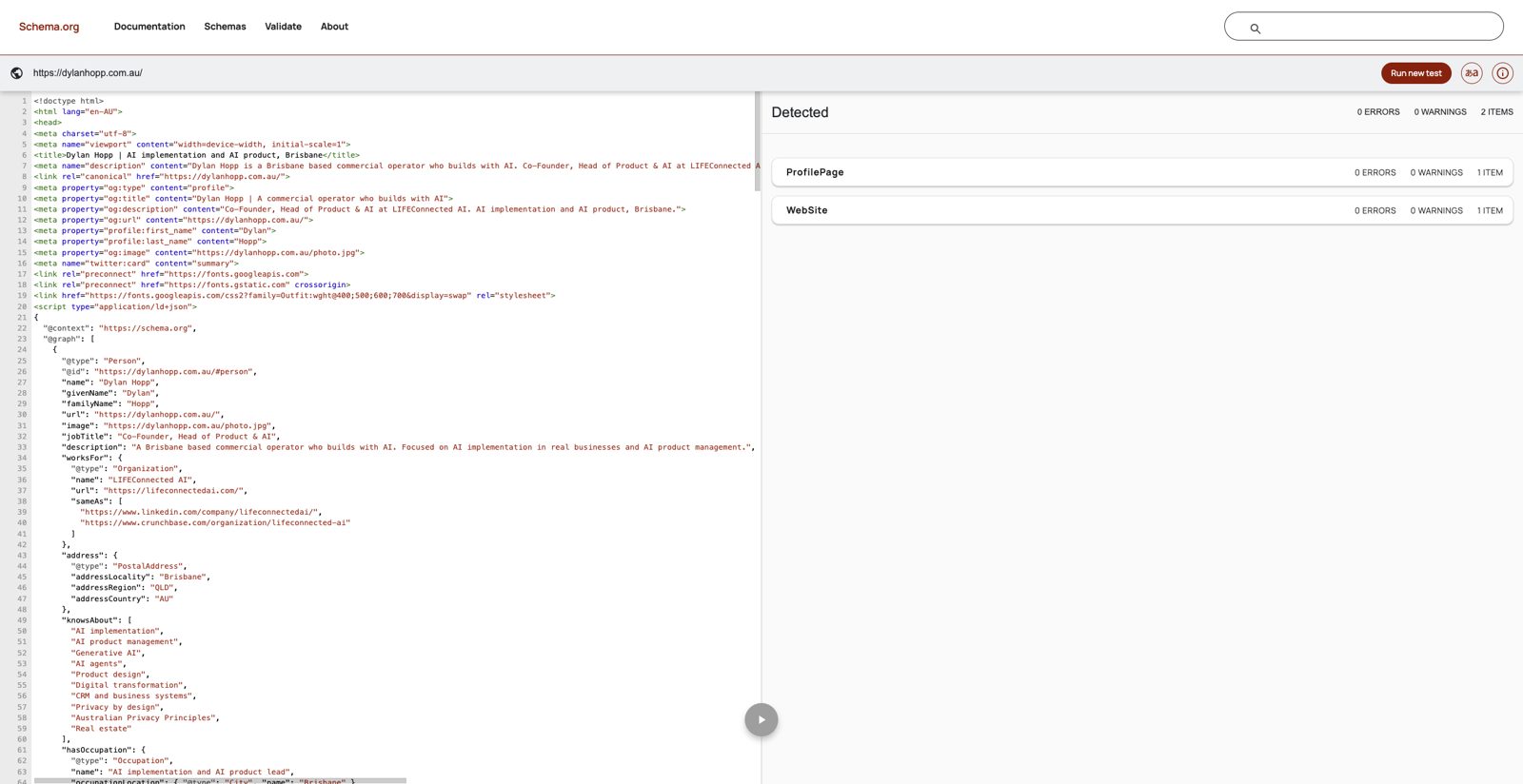
I built my website so AI could find me. On purpose.
Most personal websites are written for people. Mine is also written for machines.
Behind the page there's a structured record that tells Google, ChatGPT and the other AI tools exactly who I am: my name, my role, where I'm based, what I know about, and links to my other profiles so they know it's all the same person. Every post I publish is tagged the same way and mirrored from LinkedIn to my own domain, so my track record lives somewhere I control.
Why bother?
Because when someone searches my name or asks an AI about a Brisbane General Manager who builds with AI, I want the answer to be clear, consistent and mine. Not a guess stitched together from old listings.
And because building it taught me more about how these systems actually retrieve and trust information than any course could. That understanding is the same one I brought to the app I built for LIFEConnected AI: if you want an AI to give a good answer, you have to be deliberate about what you feed it.
If you're curious, search my name and see what comes back. Then open the page source at dylanhopp.com.au and you'll see the scaffolding.
The scaffolding
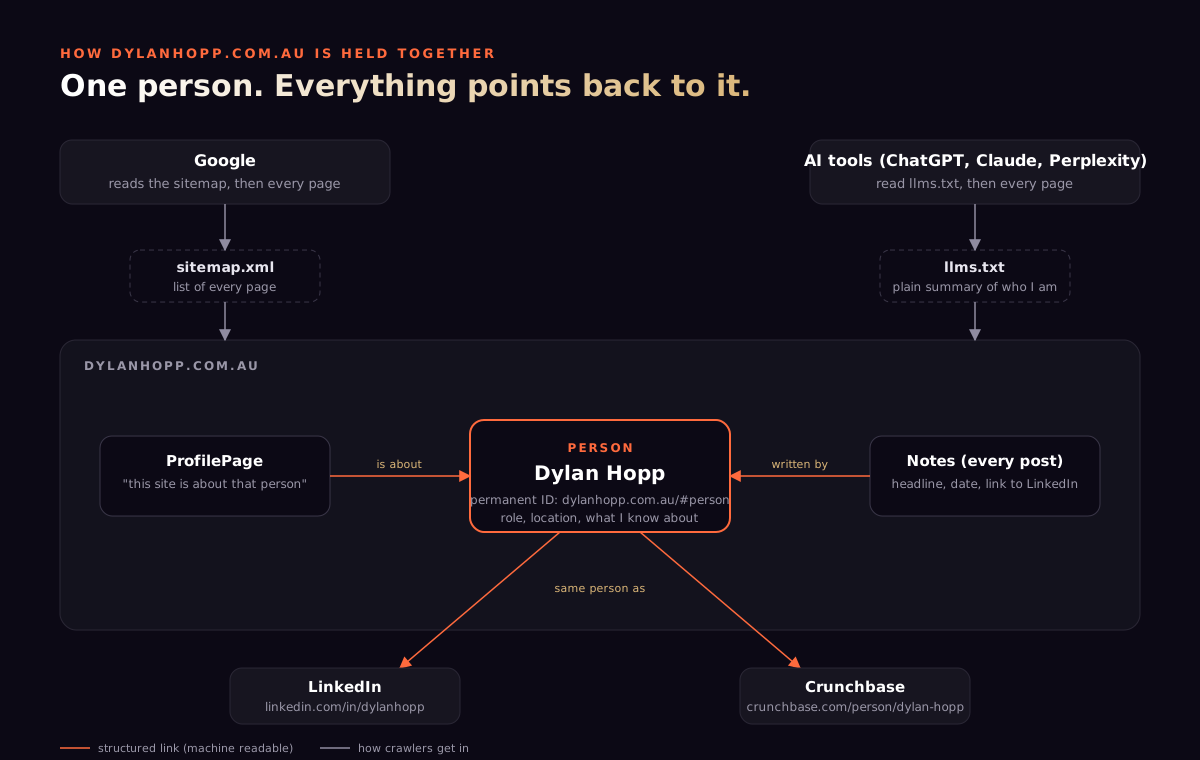
What's actually there
- A Person record with a permanent ID
- A ProfilePage that says this site is about that person
- sameAs links to LinkedIn and Crunchbase
- Article markup on every Note
- A sitemap submitted to Google
- An llms.txt summary for AI crawlers
None of this is hard. It's just deliberate. That's most of what good AI work is.
Happy to share how I did it. It took a day and no code I had to write by hand.
General Manager, Brisbane. Builds with AI. More about me